

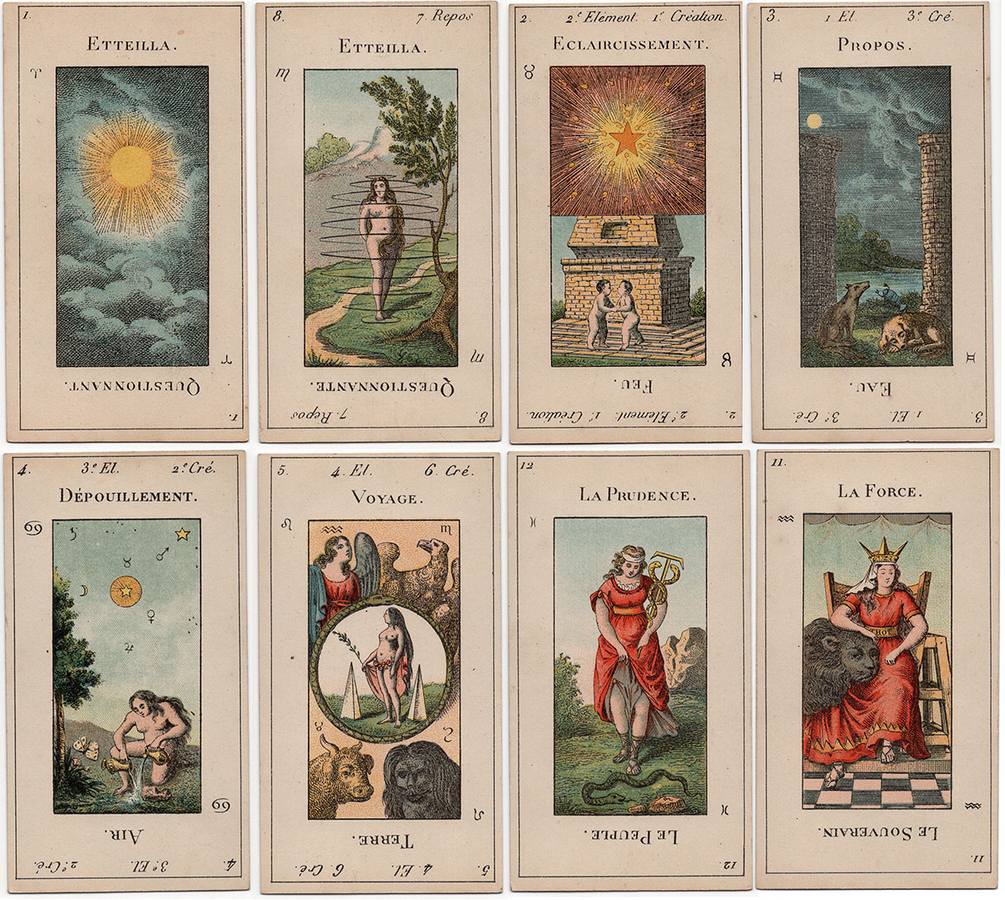
 Tarot cards have far deeper roots than modern society commonly assumes. According to one version, their symbols trace back to Ancient Egypt — long before the Common Era. In temples of knowledge, where priestesses and priests worked with sacred symbols, there existed a system of transmitting information through archetypes, numbers, and signs. This knowledge was not entertainment — it served as a tool for connection with Higher forces.
The symbolism of Tarot resonates with Sumerian knowledge about the structure of the universe, as well as with sacred numerology and astrology. Each card is not merely an image, but a code: a number, an archetype, a planetary energy, a path of the soul. That is why Tarot resonates so deeply with people — it operates through universal laws of space.
In essence, Tarot is a tool for reading information from the energetic field, from our spatial portal of possibilities. The cards do not “predict” nor “control” destiny. They help reveal what already exists within the field of potential — directions, lessons, and possibilities.
In ancient times, the cards or their prototypes were used by priestesses to receive answers from the gods, to understand the will of the heavens and to choose the right path. Over time, this knowledge became intertwined with mystical practices, and Tarot began to be associated with magic, witchcraft, and dark rituals. Thus, the myth of the “dark” nature of the cards was born.
However, the instrument itself remains pure and neutral. Just as a knife can cut bread or cause harm, Tarot depends solely on the intention of the person who uses it.
One does not need psychic abilities to work with the cards. Developed intuition, inner honesty, and proper alignment are enough. A person who lives in harmony, vibrates at a higher frequency, and asks conscious questions can receive answers through Tarot from their Higher Self, from their guiding angels.
Tarot is not about fear.
It is about awareness.
Not about magic — but about connection.
Not about dependency — but about responsibility.
And it is precisely in this way — pure, profound, and spiritually ethical — that I support and develop this instrument in my practice.